SONAM WANGCHUK ENDS 26-DAY HUNGER STRIKE
After Government Assurances on Education ReformsIntroduction
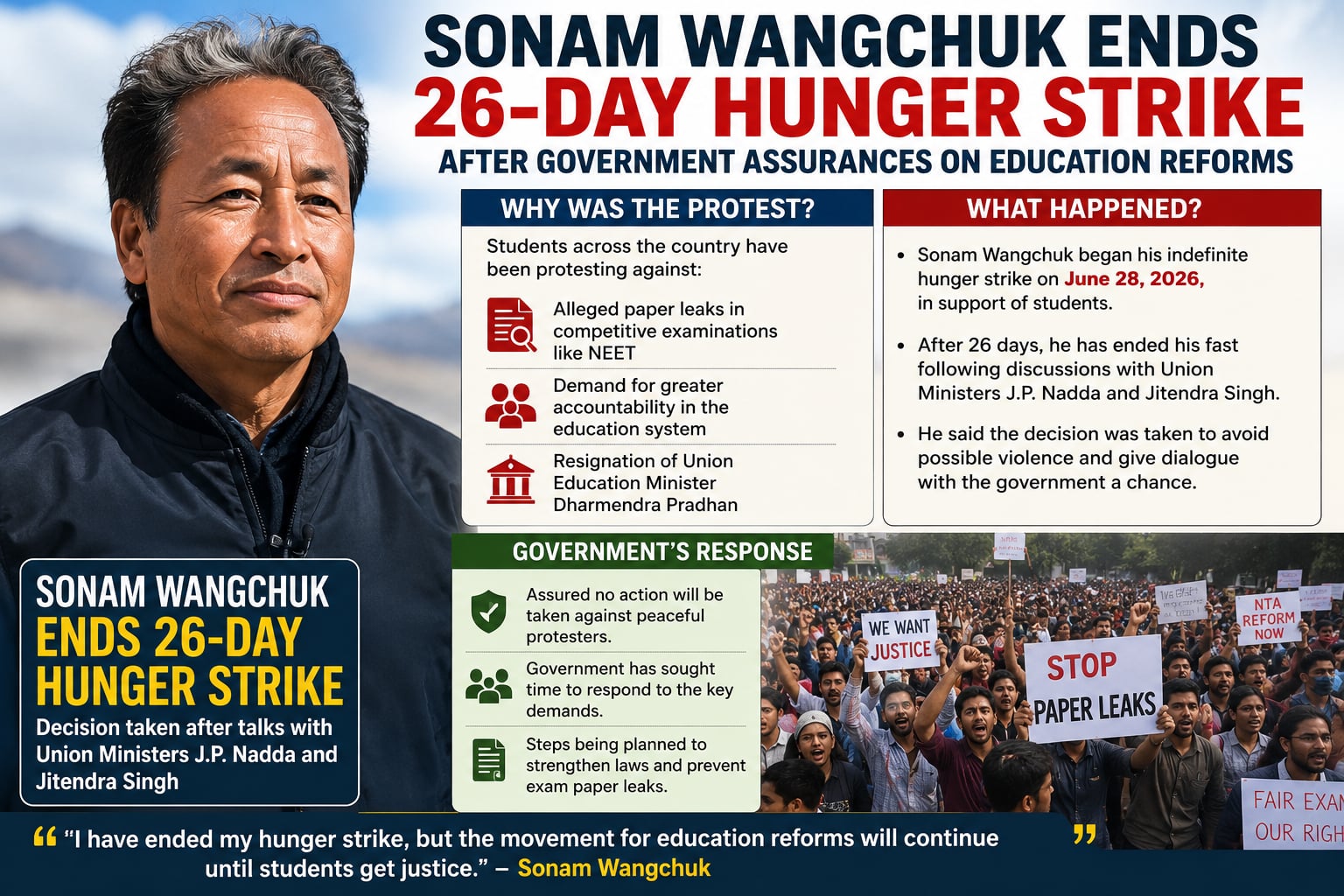
Sonam Wangchuk, a renowned engineer, education reformer, and environmental activist, has ended his 26-day hunger strike after receiving assurances from the Central Government. His peaceful protest attracted nationwide attention and highlighted students' concerns about transparency, fairness, and reforms in India's examination system.
Why Did Sonam Wangchuk Start the Hunger Strike?
Sonam Wangchuk began his hunger strike on June 28, 2026 to support students protesting against alleged examination paper leaks and irregularities in competitive examinations. His objective was to encourage the government to strengthen the education system and restore public trust.
- Transparent investigation into paper leaks.
- Strict action against those responsible.
- Better security for competitive examinations.
- Comprehensive education reforms.
- Greater accountability from authorities.
Government's Response
Following several rounds of discussions with senior government leaders, the government assured that peaceful protesters would not face unnecessary legal action. Officials also promised continued dialogue with student representatives and announced that stronger measures would be considered to prevent future examination paper leaks.
Key Update:After receiving government assurances and to maintain peace, Sonam Wangchuk officially ended his 26-day hunger strike while stating that the movement for education reforms would continue.
Why Did He End the Hunger Strike?
After fasting for nearly a month, Sonam Wangchuk explained that continuing the hunger strike could increase tensions. Since the government agreed to continue discussions and examine the students' demands, he decided to end his fast while keeping the movement peaceful.
What Happens Next?
Although the hunger strike has ended, student organizations have announced that their campaign for examination reforms will continue. Protest leaders expect the government to introduce meaningful changes that improve transparency and prevent future examination irregularities.
Conclusion
Sonam Wangchuk's 26-day hunger strike has become a symbol of the demand for fairness, transparency, and accountability in India's education system. His decision to end the fast reflects a commitment to peaceful dialogue while continuing to support students seeking long-term educational reforms.
Last Updated: July 2026
Discussion (0)
No comments yet. Be the first to join the conversation!